6heads sustainability shorts playlist

A very innovative and participatory format. Crowd sourced, quick action film shorts on sustainability. Excellent viewing and a great resource.

Isabella Gaupmann's avatar6heads

We’d like to say a big thank you to the film stars who presented their favourite sustainability-themed movie at the 6heads sustainability shorts. We have collected all inspiring film clips and added them to our 6heads youtube channel – so feel free to watch and share the short films which are all great examples for  film as a tool for communicating sustainability.

If you’d like to watch the whole playlist click on “Play All” in the video below, or just watch individual movies from our Film page. You can also access all videos on our youtube channel here: http://bit.ly/1c7UQdp 

If you know about an inspiring sustainability-themed film clip that you’d like to share please feel free to send the link together with a brief explanation of why you’ve chosen it to film@6-heads.com and we will add it to the playlist.

http://www.youtube.com/watch?v=tZqRj4mMinw&feature=share&list=PLLx28VJJ_ehGNCawL2rjiqspGW8oRaXRK

View original post

The next, next thing…

Yesterday, I spent a wonderful morning with the super-smart Sonny Masero learning about Cleanweb.  This is – the overlap between big data and clean tech.  Or – how to use the power of information to change the world.

It reminded me of the Scandinavian strategic response to EV’s – “we will invest in regulation and infrastructure around electric vehicles – however, our national strategy is to own the expertise, globally, in the technology underpinning their operation”.

And it seems to touch on exploding innovation spaces:

  • it powers the sharing economy space by providing platforms to share e.g. Zipcar, AirBnB
  • it provides the way to collect and transfer mobile information between phone holders and providers e.g. between bankers, weather forecasters, education providers and almost every Kenyan
  • it will be the real revenue earner behind innovative new energy management products e.g. Nest

The case is made stronger by the recent acquisition of the Climate Corporation by Monsanto for $1bn.

What data could help you/us/them develop solutions for positive social and environmental change?

Ideas?  Please send them through…

Interested?  Keep watching this space… 

6heads is rolling out the red carpet for friends from Interface, M&S, Virgin and YOU

Hope you are dusting off your Oscar worthy wear and sparkling the spangles – should be an excellent evening…

Isabella Gaupmann's avatar6heads

6heads sustainability shorts header

Film captures the imagination, tells stories and stirs emotion. For sustainability practitioners and businesses innovating and shaping brighter futures, it is a powerful tool to drive change.

6heads invite you to join friends and filmstars from Given, Imperial, Interface, M&S, Virgin Earth Challenge and other leading lights in the world of sustainability.

Date:  11th of December at 6.30. Films start sharp at 7pm.

Venue: Imperial College Cinema, Prince Consort Road, South Kensington

Register here: 6heads-shorts.eventbrite.co.uk

A fast-paced, crowd-sourced evening of (very) short films and clips that inspire change

We’re looking for film stars that are willing to dust off their Oscar finery and share their own favourite sustainability-themed movie/clip. Each presenter will provide a rapid-fire screening of a film/clip (less than 3 minutes) and an inspiring explanation for their selection (2-3 minutes). Spaces for sharing are extremely limited so please apply when registering for your ticket above. Just send…

View original post 99 more words

Transformative education: A luxury for rich kids? Part 3

If education is the foundation for how our society evolves into the future – then how do we align this important system to our emergent societal needs?

Leigh Meinert, co-founder and Executive Director of the innovative education institution, Tsiba in South Africa, reflects here on “Why transformative education is essential?”  This is the third of three guest blogs that explore Tsiba as a model for changing education.   TSiBA’s CEO and fellow co-founder, Adri Marais,will talk at a ‘Transformative Education’ conversation to be held at London Business School on 29 October 2013. There is limited availability. For more information and to book your place, please visit http://transformativeeducation.eventbrite.co.uk/

———————————————————————————–

The transformative approach to education that TSiBA adopts is a holistic mode of education that cares, that inspires and that brings the best out in each individual.

Many of you who have followed the two previous posts may have found yourselves thinking, “Well this sounds good but isn’t this a luxury for rich kids?”

All of TSiBA’s students are on full tuition scholarships and none of them come from well-off households. Further, it is not a luxury – society is already paying a very high price for not educating in this way.

Drop-out rates are staggering. One of the reasons for this is that teachers are not engaging young people in classroom – they don’t find their studies meaningful or relevant. Even if they get as far as passing and getting a job, it may well be one that does not engage them fully.

Many people burn out mid-career because they have been chasing goals and values that aren’t their own. People who redirect when they finally discover their passion but lose years that they can never regain. Even worse, countless people never really bring their full self to their jobs or to their world because they’ve never discovered what their passion is, they’ve never asked the right questions, or had the support of a coach or mentor who help them find the courage and the support to follow it. Maybe you are one of those people?

The opportunity cost of not educating for transformation is therefore extremely high – for individuals and our society.

Yet this kind of education need not cost a lot – what is required is a shift in the way we think of the purpose of education and those who are doing the educating: from students as numbers being educated to find jobs to people in a supported learning community finding their purpose.

Students are immersed into a community that practises this new way of being. Self Development and Leadership are hard-wired into the curriculum of any degree. We’ve honed a process called a Portfolio of Leadership and Learning, where students report back to a panel of peers and their mentors, as well as academic staff, on their growth in the past six months and they also self-assess themselves.

We have only been graduating students for 5 years and already we have 5 Mandela Rhodes scholars, the highest accolade for post-graduate students throughout Africa. People regularly come back to us and tell us that our students are “different” somehow; that there is something “special” about them.

I think it is because their education has been transformative and we’ve done this in three ways:

  • We’ve focused on helping our students find their passion,
  • We’ve asked them powerful questions that we don’t have the answers to, because
  • We see our role as that of mentors and coaches.

Educators themselves realise that their continued self-development is as important, if not more important than that of their students. They engage in reflective practise, engage in learning communities with peers and have access to mentors and coaches. Tsiba requires educators to:

  • Dig deep, connect to and revive our own passions,
  • Reflect on questions that we don’t have answers to, alone and with peers, and to
  • Fundamentally change the way that we’ve traditionally thought about our role in the classroom.

In a rapidly changing world that requires each of us to bring all of ourselves to the problems that face us and generations to come, we cannot afford not to set out on this transformative journey.

TSiBA is the kind of learning community that provides courage and support to all.

Imagine a society made up of “special”?

Transformative education: Teaching for tomorrow Part 2

Nicola Millson's avatar6heads

If education is the foundation for how our society evolves into the future – then how do we align this important system to our emergent societal needs?

Leigh Meinert, co-founder and Executive Director of the innovative education institution, Tsiba in South Africa, reflects here on “What transformative education looks like?”  This is the second of three guest blogs that explores Tsiba as a model for changing education.   TSiBA’s CEO and fellow co-founder, Adri Marais,will talk at a ‘Transformative Education’ coversation to be held at London Business School on 29 October 2013. There is limited availability. For more information and to book your place, please visit http://transformativeeducation.eventbrite.co.uk/

———————————————————————————–

In my first blog, I defined transformative education based on its three distinctive characteristics: http://bit.ly/192O9Ig

  • It is education that helps people to find their purpose.tsiba logo
  • It is education that asks more questions and gives fewer answers and,
  • It is…

View original post 659 more words

Transformative education: Teaching for tomorrow Part 1

If education is the foundation for how our society evolves into the future – then how do we align this important system to our emergent needs?

Leigh Meinert, co-founder and executive director of the innovative education institution, Tsiba in South Africa, reflects here on “What is transformative education?”.  This is one of three guest blogs that explores Tsiba as a model for changing education.   www.tsiba.org.za

—————————————————————————————–

What is transformative education? How do we teach, and learn, so that individuals are renewed and inspired and societies, ultimately, are changed?

Firstly, it is important to acknowledge that our “modern “day education system was designed to serve an industrialising society. We needed factory workers and so our schools were essentially designed like sausage machines. In the industrial world you gained a head start in life by knowing a great deal of content knowledge – facts and theories. Indeed, the more knowledge you had the more power you had and you would probably end up being the boss of the factory.  Today all of that knowledge is available online and the challenges that we are facing are more complex. The knowledge that we teach will be obsolete in a few years but our outdated education system still lines people up in rows and tells young people what we think they need to know.

What we need today – more than ever before – are leaders and entrepreneurs. People who are creative and visionary. People who make jobs and don’t just take them. In order to navigate through a rapidly changing world, young people don’t only need facts and theories, what they really need to know is themselves, their values, their passion and their purpose. This is what gives them a head start and transformative helps them to find this.

Secondly, we need to recognise that knowledge about ourselves and what is important to us cannot be found in books or even online. Knowledge about ourselves comes through engagement with the world and reflection upon this. As educators and parents, we cannot give our children these answers. We cannot teach them that which they now most need to know, we can only ask them good questions that promote good thinking.

Today we need to equip young people for a world where there are no longer any easy answers, but as educators we are not comfortable with open ended questions. To teach in this way requires a radical change in our understanding of what it means to be a teacher.

And so, thirdly, transformative education requires teachers to be mentors and coaches. Instead of being the people at the front of the classroom with all the answers we need to sit alongside our students and help them find their own answers.  When we think back on our own formative years, what really engaged us about the teachers and adults who inspired us was not what they taught us but who they were. They made a difference in our lives because they cared about us, because they listened to us and often, because they were leading purposeful lives themselves.

To summarise then, transformative education has three significantly different elements to it:

  • It is education that helps people to find their purpose.
  • It is education that asks more questions and gives fewer answers and,
  • It is education that requires teachers to become mentors and coaches.

In my following blog post, I will provide an example of an undergraduate business school called TSiBA where these elements are applied with transformative effect.

 TSiBA’s CEO and fellow co-founder, Adri Marais, talk at the ‘Transformative Education’ event held at London Business School on 29 October 2013. There is limited availability. For more information and to book your place, please visit http://transformativeeducation.eventbrite.co.uk/

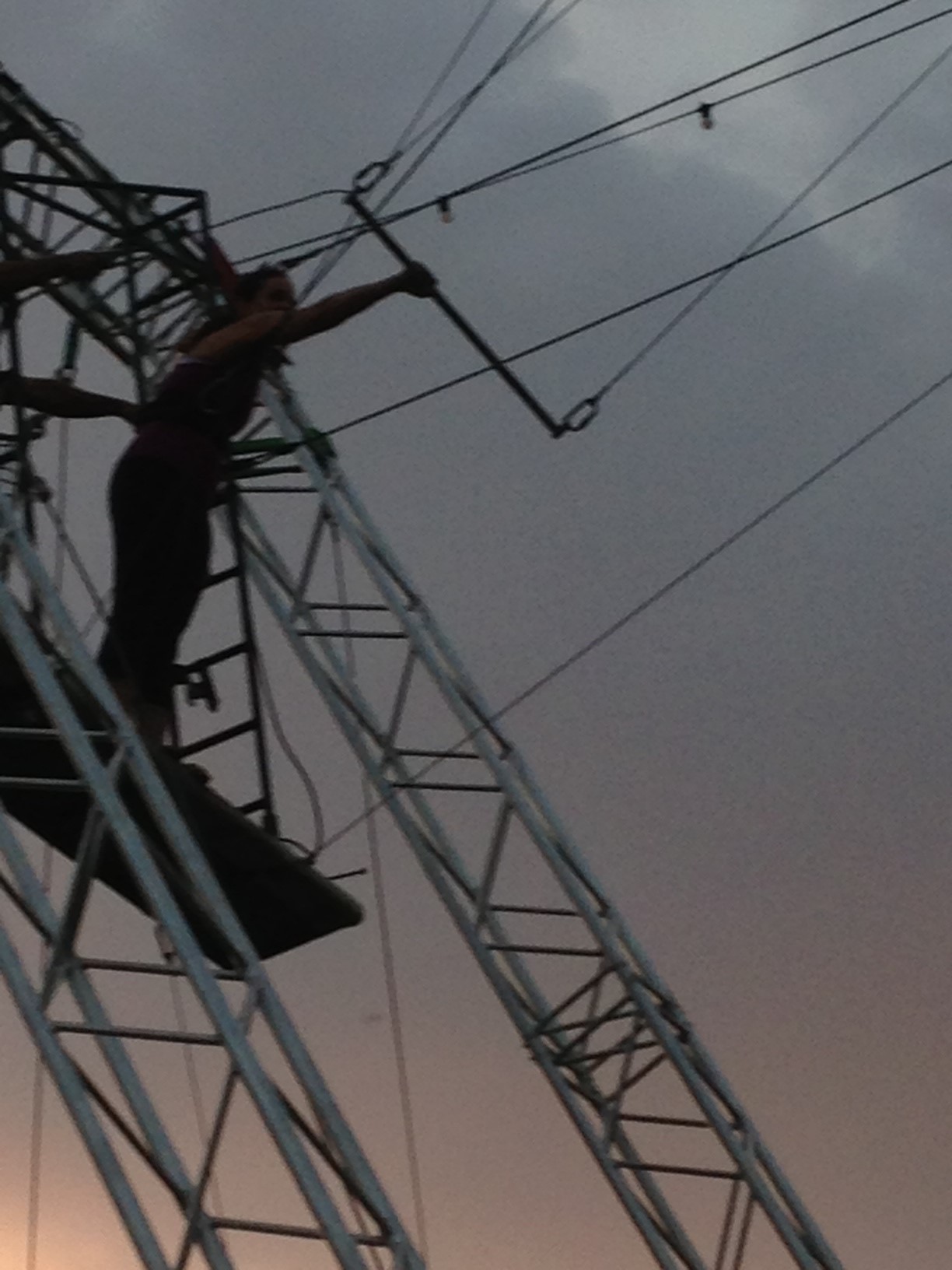
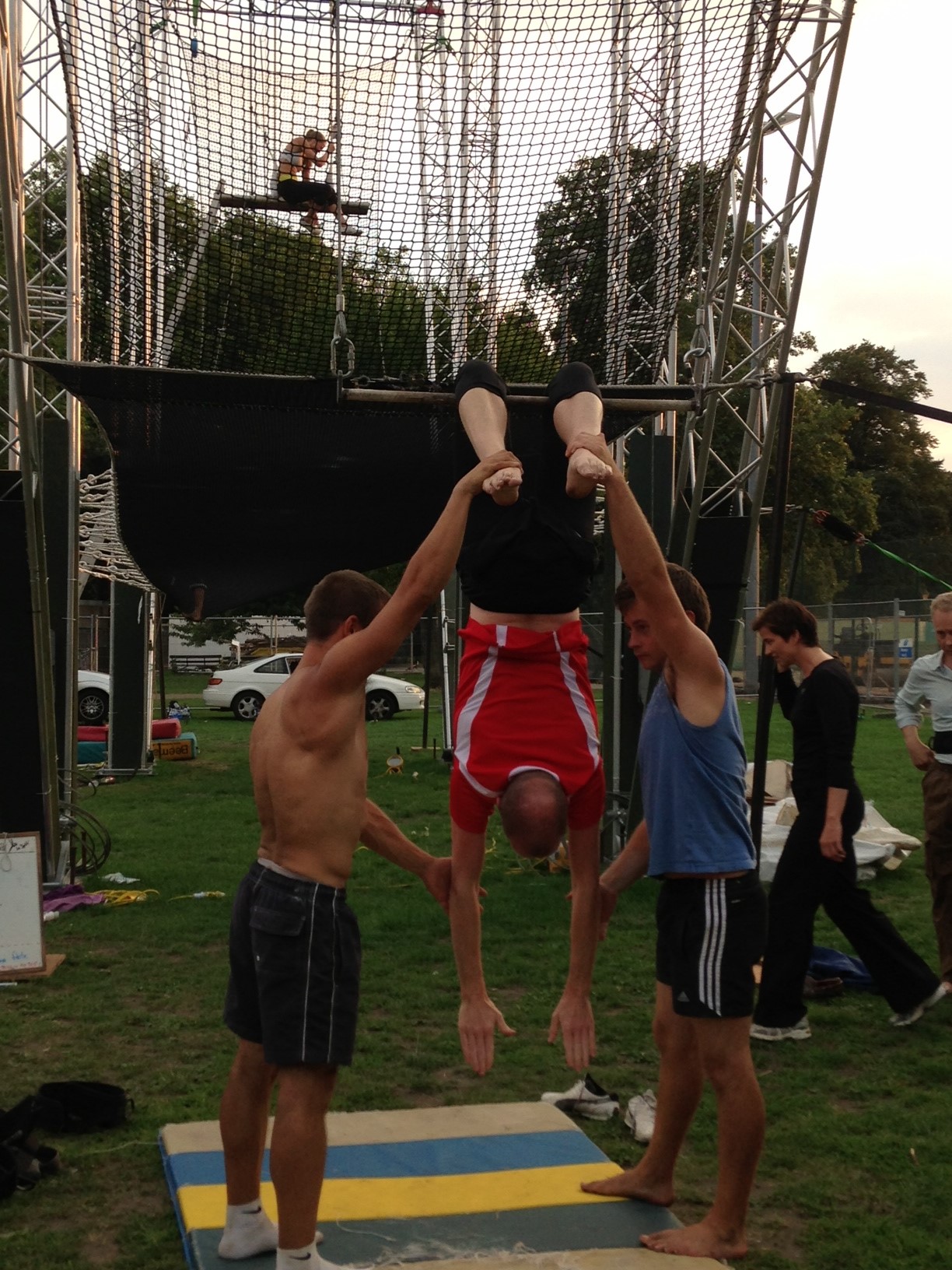
Learning and letting go: exploring change through trapeze

Magical, transformative evening last night exploring our own reactions to liminal space – the space between.

A chance to examine the rationality of our individual and organisational fear when it comes to embracing the unknown – and to use these lessons in our personal and professional lives to build resilience to change.

An exhilarating kinaesthetic experience of letting go, stepping into nothingness and hoping to find our way safely down.

Magical evening with inspirational changemakers.

Scary, inspiring and thought-provoking.

This was a pilot – we would love you to join next time.

More to follow.

Cori Connor (2) Louise Second hand scary First lesson Watching

*Liminal space is defined as the space between – and it is through this space we must navigate if we are to achieve any kind of change – whether it is our own behaviour, society, business strategy or, for many of us our impact, on the environment .  In short we must let go of something familiar to take up something new and the transition is often through unchartered territory.

Join the Next Manufacturing Revolution

A new report to help UK manufacturers improve their non-labour resource productivity found that while many UK manufacturers have achieved 10 to 15% efficiency gains over the last decade, leading companies have achieved over 50% improvements in the same timeframe.

The report identifies the significant untapped opportunities for UK manufacturing in non-labour resource efficiency and outlines a programme of action to address the barriers to uptake.

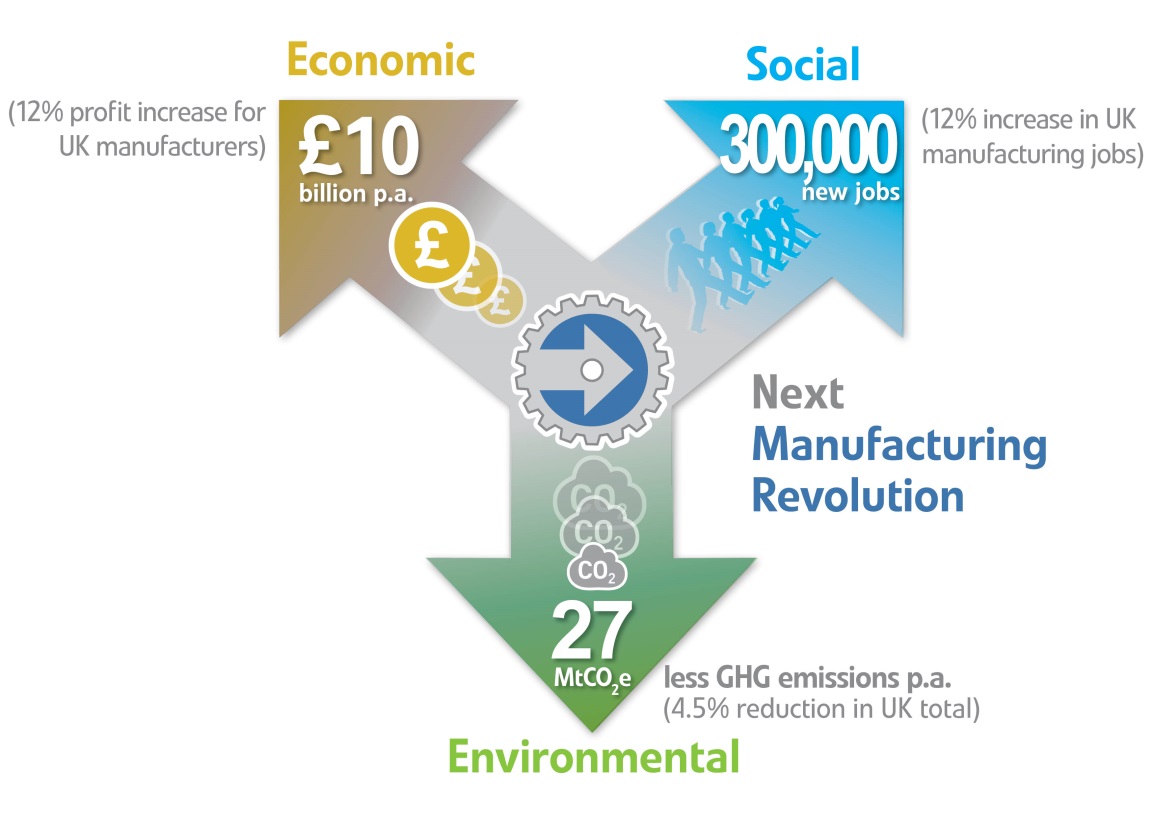
This opportunity was conservatively calculated to be worth £10 billion p.a. in additional profits for UK manufacturers, to create 300,000 new jobs and to reduce CO2e emissions by 24% for the UK manufacturing sector (4.5% of UK’s total annual emissions).

Image


The report was launched by the The Next Manufacturing Revolution , a not-for-profit collaboration between Lavery Pennell, the University of Cambridge’s Institute for Manufacturing and 2degrees.  It summarises 12 months of research examining resource efficiency performance compared to international good practice for each sub-sector.

All manufacturing companies were found to have room for improvement:

  • Four types of improvement were identified which are rarely all fully utilised: incremental improvement, process and system improvement, structural change and core redesign.
  • Even leading companies are performing inconsistently across the resource efficiency topics examined of circular resource use, transport efficiency, energy efficiency, packaging optimisation, supply chain collaboration and resource efficient product & business model innovation.
  • Wider benefits from the programme also accrue to communities including indirect jobs, greater tax revenues and an improved environment.

Based on this research, and supported by case studies from the private sector, Next Manufacturing Revolution (NMR) has developed a programme to help manufacturing companies realise these benefits, comprising three platforms.  The first is the NMR Community, which provides in-depth information, research and interactive information exchange forums, openly accessible to all. The second focuses on Barriers Resolution and Rollout, working collaboratively with experts and manufacturers to overcome industry obstacles that currently prevent the improvement of non-labour resource productivity, through a series of workshops. The third platform is Tailored Support which involves one-to-one advice for manufacturers seeking to identify improvement opportunities within their companies from non-labour resource management.

NMR now welcomes the involvement of companies and industry organisations who can participate to the extent that they wish, dependent upon their specific objectives and business planning needs.  The programme is accessible, flexible, and designed to deliver results consistent with those seen in case studies of best practice from the private sector.

Implementation of this programme is now underway; collaboration with government, member organisations, other NGOs, and publications will assist to accelerate this programme. Organisations and manufacturers seeking to participate can contact secretariat@nextmanufacturingrevolution.org.

You can download the full report here and read more about NMR at www.nextmanufacturingrevolution.org.


A 2nd challenge and an invitation – Can you beat the peak?

Nicola Millson's avatar6heads

A challenge:

peak

Nesta is currently looking for smart data solutions to give the UK better management of peak electricity demand*.  This is in the form of a challenge, with a prize (£50 000), expert support and exposure for winners.

An invitation:

There are a few ways to get involved –

If anyone needs further information or would like to put forward an innovator, introduce an innovator or get involved, please feel free to contact me on nicola.millson@6-heads.com

And more information:

*The challenge is all around dynamic demand / demand side response.  They want to find a new product, technology or service that utilises data…

View original post 75 more words

Essential reading for system change super-heros

Volans recently released a new report on ‘breakthrough’ capitalism.  This inspirational report is a toolkit for anybody wanting to understand and shift the existing staus quo towards a future that makes sense. This is one where we live equitably, within our planetary boundaries. It reminds us of Donatella Meadows ways to shift a system and, additionally, highlights 7 high-impact areas where breakthrough change is emerging. These are: science (accepted one planet limits), activism (embedded in c-suite revolutionaries), institutions (create inter-generational wealth), access (prosumers build own, better futures), finance (positive externalities), economics (economies as living systems), and culture (works for majority – not wealthy minority).  It is a call and guide to anyone looking to lead radical change….  http://www.breakthroughcapitalism.com/breakthrough_report.html