A sisterhood for societal change: how invisible networks of care re-shape our society

Image

This week I was at the launch of Lloyds ‘Helping Britain Prosper’ plan.  I noticed that they have a goal to have 40% women filling executive positions by 2020.  On the tube on the way home I read that empirical evidence has been gathered that bringing women into senior roles affects the bottom line – positively. When later I asked a senior man in DIFD what the one thing he thinks needs to be done that would change the destiny of the millions living below the breadline he said “educate and empower women”.

I myself come from a strong line of women – all of whom have had to carve out their own destinies.  Marked among them are my grandmother who – in her early 30’s, widowed with 2 children and no education – set up a tie factory in Africa. Or my mother who challenged the status quo in South Africa by being a female physiotherapist to major sports teams – “a women in the locker rooms”.

I’m not however a feminist – I get squeamish at any kind of separation – probably a legacy of growing up under apartheid. Although I hear the need for ‘special treatment’ I think on one level this reinforces the idea of victimhood and perpetrates the very issue it’s trying to solve. For many years my best friend headed up a national institution to further the rights of women and although I appreciated the institutional acknowledgement of gender imbalance, I was a hesitant to support it (bad friend!). I wanted instead to change the perspectives that forced this need – across all sectors of our diverse society and not just gender related.

I’ve worked in large commercial institutions all my life.  I have listened in on the tense debates about how to succeed women have to ‘turn into men’, that those females that reach the top are harder on other women and that women ‘opt out’ to care for families and are not a reliable corporate investment. My last ‘real’ job I was paid almost 20% less than the men on our team – despite the high pressure and profile of my role within it.

Yet, despite this loaded topic and my own discomfort with gender as a focal point, I have come to deeply appreciate the women who have given me a hand up – particularly in my career over the past few years. Perhaps (somewhat ironically!), it is a particularly female attribute to express gratitude for a reciprocal relationship – I do deliver on our tacit agreements. However, I know that without the support of these women in my sector I – no matter how talented – would not be able to fully play out my unique attributes and dreams for both self-manifestation and social change.  I don’t offer a ‘plug and play’ set of skills – I’m not an accountant, a lawyer, a teacher or with a clear boxed set of proven skills. I’m a business change maker, a commercial transformer – a more tricky proposition. Somehow it is majority women, (and a few enlightened men!), who read my potential and take significant risks to match them to their organisations, bring me into senior roles and create conditions to allow me to flourish.

6heads started with a call from a very busy senior woman to meet to discuss what we could do for her organisation. Yesterday I was introduced to executive decision-makers by another women, who trusted me to support and enrich a critical initiative. Today a third called me to tell me that a proposal that will radically affect my future, my fortunes and the lives of hundreds of others has been accepted – I know she has been working extremely hard in the background building confidence in me to make this happen.

I think all of us with all of our diverse strengths and perspectives – be it gender, race, nationality or perspective have a significant contribution to make to a better world. But I am deeply grateful for the women that took time to understand, trusted their intuition and have reached a hand out to me, as I continue to carve my unique career journey. I won’t let you down!

Perhaps it is this invisible network of care that will ultimately, positively effect change in any under-represented part of our society that requires visibility and opportunity in order to thrive.

And now I have to go – I have a call with a young woman who wants career advice – I’m consciously paying it forward.

Thank you ladies. 

Striking gold in recruitment

As small companies scale it becomes critical to hire good people – and very difficult in a traditional interview situation for a time-strapped entrepreneur to assess whether the person being interviewed is, in fact, the rare being they want to hire. And hiring mistakes for a small organisation are costly.

A group of entrepreneurs suggested these ideas:

1. Quick test: Leave a number connected to an answer phone. Get them to call back and leave a message with their name, number and reason for application. Their energy, ambition and ability to articulate will all be immediately apparent. An easy way to a short-list of candidates.

2. Structured interview: Have a set list of critical questions. Rate each applicant immediately after the interview against questions out of 10. After all the interviews add up scores and use this as an objective way to test your overall perception of performance.

3. Conduct “stay” interviews: It is more cost-effective to retain excellent staff than have to source new ones. These are regular interviews with key existing staff where you ask “Why are you still here?”

I’m sure there are many other ideas – but I quite liked these and thought I’d share them…


All February’s inspirations – and how to keep the sunshine into March…

An Inspired February

Your February posts have been little beacons of clarity and light”

Today is the last day of our month of inspirations. We’ve loved how they have spread out like ripples to far shores and connected us and the ideas within to new people and places. Thank you Columbia, Canada, Singapore, Botswana, Brazil, Romania and all the other places that picked up on this! We like the possibility that we’ve not only brought daily sunshine but somehow inspired change.

We’ve enjoyed having others volunteer to write – and encourage anyone who’d like to write, to contact us for future blogs at info@6-heads.com. We know our stories are currently UK centric – you can change that!

We’ve enjoyed a sense of community beyond our normal group of change warriors.  We’d love to invite you to continue to join us at our events or our regular UK members meetings. For more details have a look here: events , or join our regular newsletter here: newsletter

And of course, if there is any other way we can support you: through talks, writing, training, consulting or spring-boarding your business idea – please do get in touch!

For today’s inspiration, we invite you to enjoy a selection from the past month:

Thank you for joining us on this sunshine journey for February. 

May 2014 be your best year yet. 

sunshine

28 Days of Inspiration – Day 27: Radical you

Radical you

Your journey into tomorrow

What shape
waits in the seed
of you to grow
and spread
its branches
against a future sky?

The 6heads crew hope you’ve enjoyed and been stimulated by the past month of daily future-focused inspiration.  6heads is about sharing inspiration, and also it’s also about encouraging action and supporting positive change where we can.

It seems appropriate to end our month with a question for you:
What are you going to do next to shape a sustainable future for yourself and the people and things you care about?

Creating change means courage to show personal leadership. We’re inspired by the people who help others to grow, take a leap into the unknown and become more than they thought they could be.  From the amazing vision of Tsiba (who Nicola is a trustee of) in delivering transformative education in South Africa  to our friend Darius Norell and his Spring Project’s brilliant Radical Employability and UnRecruitment work in London, many people are doing fantastic work in this space.  A particularly relevant example for people interested in sustainability and transformative personal leadership is The Journey 5-day, residential programme run in Embercombe near Exeter.

Wherever your path takes you, we hope the past month has inspired you, caused a few smiles and maybe even challenged how you think about the future and what is possible. Create the tomorrow you want!

Tomorrow is our last post – please do have a look on 6-heads for a last blast for Feb…


28 Days of Inspiration: Hope in an urbanising world

Tomorrows cities today

Hope in an urbanising world

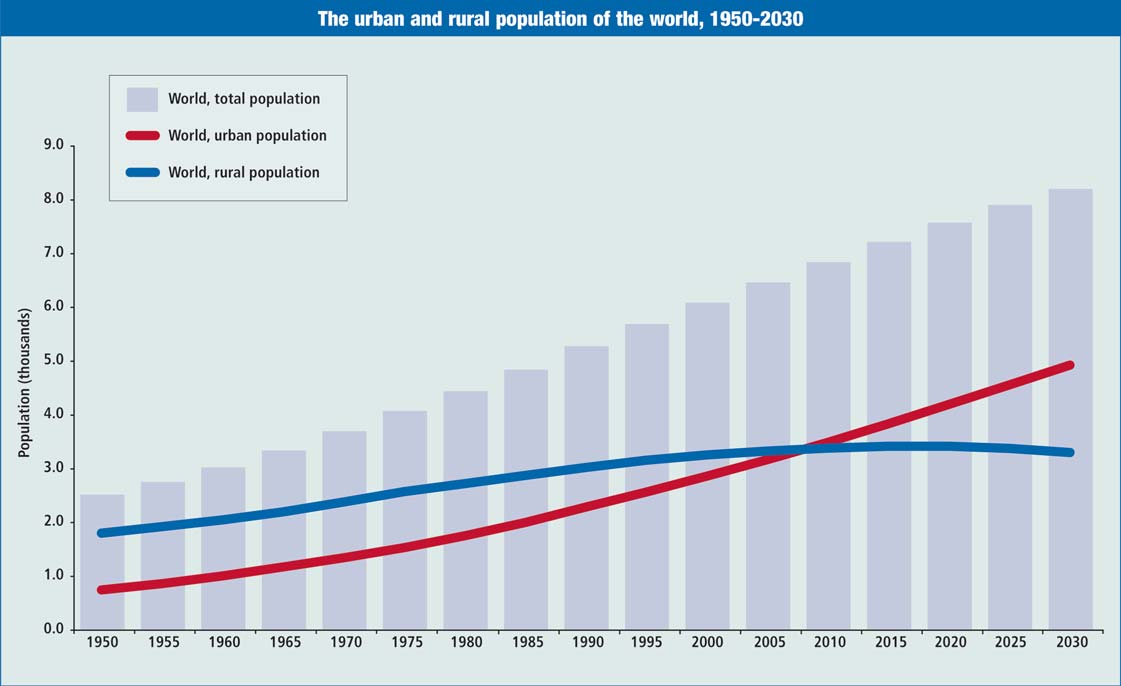
urban_rural_graph2

The statistics on our rapidly urbanising world are compelling – more people now live in cities than in the country-side.  This is expected to continue to grow, particularly in parts of the world that are both poorer and at sea-level. In a time of diminishing natural resources and a changing climate, this gives us a new set of concerns.

These two projects show possibility for a different kind of urban environment:

Mata de Sesimbra in Portugal is an endorsed One Planet Living Community Resort with 5,000 zero-carbon, zero-waste homes, hotels and shops. The scheme includes Europe’s largest-ever nature restoration scheme, to return almost 5,000 hectares of surrounding land to native Mediterranean woodland. It is innovative and ecological in its development by using sustainable building materials, solar power and being energy and water efficient. The development has a 20 year target of having ‘zero waste’ – but reaching a massive 50% of landfill diversion in the first year. A €90 million sustainable public transport network is also planned, and will eventually provide hybrid eco-shuttles, free bicycles and car clubs.

Masdar  was started in 2006 in Abu Dhabi. It uses high tech solutions to push sustainability barriers. Its vision is to provide the highest quality of life and work environment with the lowest environment footprint – and to do so in a commercially viable manner. For transport, there are no cars, but a rapid, automated transit,. They use fully renewable powered, ½ water of others places, use sustainable materials (100% sustainably sourced timber), 90% recycled-content aluminium used for the inner façade, green concrete and water-based paints.

More? See http://6-heads.com/

28 Days of Inspiration – Day 25: The power of one

Daring to be great

Today’s inspiration is about those people who have chosen a different path – one of making a real difference in the world. They’re just normal people doing something they believe in, day after day…

faces

A question we often ask is “Where best to intervene in a system to create significant change?”. Paul Dickenson saw a pressure point in the role of shareholders. He is Co-founder and Chief Executive of the Carbon Disclosure Project (CDP), which provides a coordinating secretariat for 330 investors with assets of over $40 trillion who request information on greenhouse gas emissions from over 2,400 corporations. With more than 1,300 large corporations reporting through CDP, the CDP web site http://www.cdproject.net is the largest registry of corporate greenhouse gas emissions in the world.

There are lots of lawyers – most propping up the status quo, Polly Higgins talks of love and leadership, and runs a strong campaign on eradicating ecocide, fighting for its legal status to be enshrined by 2020.

A co-founder of Tsiba University, Leigh Meinert set-out to provide education opportunities to deserving youngsters from impoverished backgrounds – fundamentally changing society in South Africa. 5 Mandela Rhodes scholars produced in 4 years means she and fellow luminaries are doing something right.

Many people travel through communities facing extreme struggles to survive – few do anything. Alison Hall is different, after a trip to Uganda she set-up Seeds for Development which started off advancing funds to farmers in post-war Uganda to enable them to buy seeds and other farming equipment. Today they support around 15 000 people.

Miriam Turner, Carmel McQuaid, Tom Domen, and many others aren’t names you’ll necessarily recognise. They are are corporate intrepreneurs. All have an agenda to introduce and scale change to make their organisations ‘future-fit’. Often their resilience is tested – just like the entrepreneurs mentioned above. Yet, their efforts allow the organisations they are part of to take that different path and pioneer new ways of doing things.

There are many, many more ordinary people each in their own way daring to do extraordinary things… What are you choosing to do today? 


Tsiba update: Two easy ways to support game-changing education

You may recall the three blogs written last year about the remarkable education institution creating leaders and social change in South Africa.  You may have attended (or wanted to attend) the inspirational talk by their CEO at London Business School last year. Below we get an update from them – which gives two easy ways to get involved with one very important institution:
Nelson Mandela’s passing reminded us how important it is to keep his legacy alive. For TSiBA, this means continuing to develop leaders and entrepreneurs of the highest calibre  in South Africa.  We are therefore proud to announce:
  • 90% of our graduates of 2013 are already in full-time employment.
  • TSiBA graduate Khanyisa Mtombeni, has been awarded a Kofi Annan Fellowship to study an MBA in Germany.
  • Rayne Moses, also a TSiBA graduate, inspires other entrepreneurs with his skateboarding social business:www.nebulaskateboarding.co.za
We continue to scale our impact:  this year we’ve enrolled over 450 full time students, will launch a night school for part time degree students this month, are providing youth skills training for the Department of Economic Development and have begun to market a local Executive Education offering.

We continue to provide thought leadership on community upliftment and social enterprise. Our rural campus, TSiBA Eden, won Gold at the Impumelelo Social Innovations Awards. In addition, we are participating in a think tank on social impact bonds with the University of Cape Town.

We hope you will continue your support in the year ahead as we build a non-profit organisation that will be inspirational and sustainable, long into the future.  There are two ways to get involved in the near future:

  1. Sponsor Cycling for TSiBA: Cape Argus Pick n Pay Cycle Tour
We are starting tsibaour 2014 UK fundraising, with a campaign: Cycling for Change.  Twenty cyclists will be racing in the arduous but scenically beautiful Cape Argus Cycle Tour on the 9th March in Cape Town. 
Please sponsor these cyclists to raise money for one scholarship, on: www.justgiving.com/cycle4change
You can also share this page on Facebook by going to https://apps.facebook.com/jgdonation/ and entering: Cycle4Change

As Madiba said:  “Education is the most powerful weapon you can use to change the world”

  1. Meet the CEO: Adri  Marais’s Next Visit to the UK
Adri will be in the UK between 13 – 15 May to follow up on her October 2013 visit.  Please email Leigh Meinert –leigh@tsiba.org.za if you are interested in any of the following:
  • Meeting Adri for a coffee to hear more about support opportunities
  • Introducing Adri to individuals or organisations who might be interested in supporting TSiBA
  • Joining Adri on the morning of 15th May for a relaxed cycle ride
  • Hosting a drinks evening at your home, place of work or local pub for people to meet Adri
  • Suggesting anything else Adri could do for TSiBA during her time in the UK
Of course, you can also sponsor a student’s tuition for a year for only £3200 per student. For more information about this, please email penny@tsiba.org.za

You are an important part of the TSiBA community. We look forward to you joining us in May to support our mission to ignite opportunity for emerging talent.

More on Tsiba? here

28 Days of Inspiration – Day 24: Don’t waste the opportunity

Don’t waste the opportunity

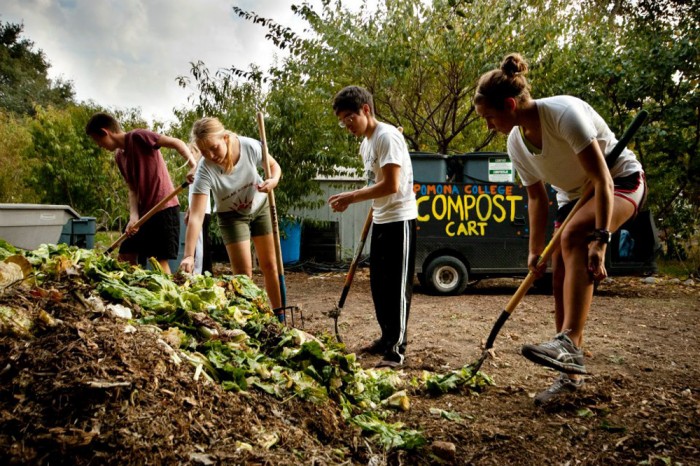
Composting-at-Pomona-College-700x466

Kate Hammer, a friend of 6heads from KILN, likes Compostory.org – she writes below:

Recycling organic material – what we commonly call “waste” – represents a huge opportunity. Today, the processes of making compost and biogas out of organics are well known and the benefits for the environment and the economy are proven. Yet still, many cities and businesses are still sending organics to landfills or incineration. Enter Compostory.org [www.compostory.org], a unique website driven by not-for-profit enterprise Green White Space [www.greenwhitespace.org].

Compostory.org is committed to building awareness and sharing best practices on how communities can create value from their waste stream and positively impact their environment. So the team has built an unprecedented online learning platform for local governments, agriculture and businesses in effort to bring their influencers up to speed on the subject matter.

The website offers open access to:

  • a free course for municipalities, farms and businesses on collecting – digesting – composting organic waste, now followed by more than 2500 influencers of waste management systems in 20+ countries
  • an industry directory to help you navigate the resource recovery industry and find support in your region
  • The Organic Stream: A podcast series featuring expert interviews and case studies from around the world, for inspiration and valuable how-to advice

Enter the learning space by subscribing here [learning space] using the guest code “6HEADS”
The weekly podcast is available on iTunes here [podcast]

Kate is part of  [www.kilnco.com], Throughline [www.throughline.co.uk] and StoryFORMs [www.storyform.co.uk]  She is likes Compostory so much she works on their advisory board.

28 Days of Inspiration – Day 23: Scotlands culinary delights?

Beyond Haggis, Whisky and deep-fried Mars bars

I am up in Scotland this weekend and finding myself inspired by the myriad of community initiatives around food.

farm scotland

The closer people come to understanding and engaging with their food source, the better they can make decisions about what to eat. Ultimately better decisions around food choice can positively impact the food system, shifting towards organic, local and seasonal produce. Where this also engages the community it can result in a more equitable and resilient system.

The Fife Diet aims to develop collective and participatory approaches to reduce our impact on the wider environment through the food choices we make. It links community members through a New Food Manifesto, which aims to get an understanding of how food can be part of restorative practice across health and well-being ecology and community. They have some fascinating initiatives and are currently looking at starting a co-op to support access to local, organics products.

Bread is a food staple and there are a few community-owned bakeries which provide an opportunity for a community to engage in producing a food staple. Breadshare, says “Our mission is to serve and involve the community by making excellent, nutritious bread using organic ingredients and distinctive local products, helping to create a more sustainable and health-enhancing food system.”

Whitmuir aims to become Scotlands first community owned farm. They have a vision that it will become a national resource on sustainable food and farming, with discovery trails, exhibits, educational opportunities and citizen science projects. People can discover what bugs and beasties do all day; why organic farming is good for you and the planet; what makes a pig happy and how to grow your own food. They provide an opportunity to explore everything from the brilliance of clover to the intricacies of the carbon cycle. You can buy a share in the farm for as little as £50.

Tying it all together is Nourish Scotland. It host events, workshops towards reconnecting producers, growers, retailers, consumers and all who care for local, sustainable food to make healthy, local, seasonal, and organic food available everywhere in Scotland.

Hungry?  Time for a visit to Scotland then…

Initiatives from your region that are inspirational?  Please send them to us at info@6-heads.com.

Just want to hear more? 5 days left of our inspiration series – sign up here: 6-heads

28 Days of Inspiration – Day 21: What’s for lunch?

Feeding the future

James discovers zero carbon farming – underground!

farm

Here at 6heads we love food and we love the pioneers blazing an innovative trail in making our food more sustainable. On our harvest hike last autumn, Kate from GrowUp talked about how they are making their vision of closed-loop, hydroponic, rooftop, urban farms a reality. Or our friends at Hodmedods, a recent start-up seeking to encourage people in the UK to fall back in love with the humble fava bean as a low carbon protein source that can be grown here, in contrast to most other beans which are imported.

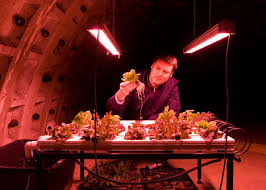
Perhaps most counter-intuitive is Zero Carbon Food’s current initiative to grow salad greens underground in an old London bomb shelter! As Stephen Drink points out it a Guardian article about the initiative: “Open field and greenhouse farmers are affected by low light, weather, pests, all of those issues”, says Dring. “Between 2009-2012 food inflation ran at about 32%. That’s because of issues with crop production and failed crops … down here we have no pests and a consistent temperature of 16C. Once we’ve put all the LED lights in they give off a little heat that will take us up to about 20C, perfect growing temperature.” The lights are currently powered by a renewable energy supplier, but they plan to generate their own renewable power on-site using wind and solar energy.