28 Days of Inspiration – Day 9: What did you do last night?

What did you do last night?

Did you dance? Any power moves?

Today’s theme, submitted by Isabella, is people powered energy. Harvesting energy from human footsteps can contribute power required to light offices, shopping centres and railway stations through floor tiles that generate electricity when they are walked over.

You can “throw some shapes” on an energy self-sufficient dance floor. The “Sustainable Dance Floor” is available for hire and your audience will help you with the electricity bill of your event. This is creates an interactive environment that is educational.

Other applications include Pavegen Systems, a UK-based company tested their installation at West Ham underground station which was a main transport hub during the 2012 Olympic Games, generating the power required to keep the station’s lights on.

For more from 6heads and to subscribe to our 28 days of inspiration: http://6-heads.com/

dancefloor1

28 Days of Inspiration – Day 8: Applied Biomimicry

Image

Designing with Nature

Applied Biomimcry

Today’s theme is provided by Isabella and it is Biomimicry – applying nature’s genius to human design challenges. Janine Benyus is the most prominent advocate of this concept that lets us apply insights from nature’s 3.8 billion years R&D to new products and processes.

There are many examples of innovation inspired by nature that have been established in different markets, but one emergent example that I find particularly fascinating is theSahara Forest Project. Michael Pawlyn and his organisation Exploration are demonstrating a pilot project that combines two proven technologies in a new way to create multiple benefits: producing large amounts of renewable energy, food and water as well as reversing desertification. A major element of the proposal is a seawater-cooled greenhouse that creates a cool growing environment in hot parts of the world and is a net producer of distilled water from seawater. The second technology, Concentrated Solar Power (CSP) involves concentrating the sun’s heat to create steam that drives conventional turbines, producing zero carbon electricity twice as efficiently as photovoltaics. 

Michael Pawlyn will be giving a talk on Feb 17 as part of Exploration’s “Designing with Nature” exhibition where you can find out more about the Sahara Forest Project and other biomimicry initiatives.
Exploration Architecture: Designing with Nature  7 February – 15 March 2014

Please signup for more inspiration, throughout February, by clicking here: http://6-heads.com/

28 Days of Inspiration – Day 7: Flying lessons

Flying Lessons

ImageMixing sustainability, education and most importantly play
Todays author is Louisa Harris – she provides some inspiration ahead of the weekend – and reminds us of the power of play

I fell in love with the book Flying Lessons by Shim Smilansky last summer. It is a colouring book designed to teach children (or in my case adults) about growing their own vegetables. On each page of the book a different line drawing of a vegetable can be coloured in. After you’ve coloured in your design, rip the page out and turn it over for instructions on how to make a paper aeroplane. The best part is that in the nose of every plane are four seeds for the vegetable which has been coloured in to create the plane – all you need to do is throw your planes into your garden and wait for the rain to dissolve the paper and for the seeds to be fertilised.

This book is beautifully thought out incorporating sustainability into all aspects of its design – the paper is made from vegetables, illustrations are done with squid ink and the manufacturing process is electricity free.

Smilansky says “My aim was to start with vegetables and end up with more vegetables without any waste or other materials used in between.”

http://www.shimsmilansky.co.uk/Flying-Lessons

To receive a daily piece of inspiration directly to your inbox in feb, please subscribe here: http://6-heads.com/

28 Days of Inspiration – Day 6: Re-imagining mud island

Re-imagining mud island

Innovation in engagement

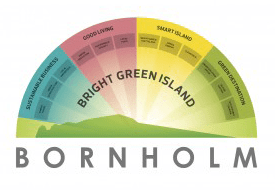
The not so affectionate term for Britain is ‘mud island’ and during rainy Feb it certainly feels that way! Imagine if, like Bornholm Island in Denmark, our home was something more inspiring – Bright Green Island, perhaps?
bornholm
Bornholm, the original Bright Green Island is working towards a vision of a sustainable society free from carbon emissions. The Bright Green Island vision has four cornerstones: Sustainable Business, the Good Life, Green Technology and Nature Destination.

A particularly inspiring initiative is the engagement of residents in creating this vision – through a game called (unsurprisingly) “My bright green island game”.

You can pick your theme for today:
1. Innovative ways towards stakeholder engagement. What have you done to inspire participation?
2. Boldly re-imagining Britain, beyond mud and carbon – what would it look like?

働く職場もしっかり見直そう

PS. As you know, each day we feature something to brighten up your Feb and inspire 2014. You can sign up for a daily bit of sunshine in your in-box here: http://6-heads.com/

PPS. Yesterday we were inspired by NearDesk. You can still sign-up to NearDesk with our special offer here: https://www.neardesk.com/buyacard/one/6heads Help save Carbon, improve community – and avoid a commute!


28 Days of Inspiration – Day 5: Where are you working today?

Carbon-less Commuting

At a workshop a few years ago we were looking  for transport solutions that would lower carbon usage. Daniel Kirk, super-smart innovation consultant, provided us all with a “duh”  moment when he suggested “best way to do that is…to uh… not go anywhere”.

NearDesk provides that solution. it provides professional office space to individuals and employees at convenient locations. For employees this often means removing a long commute and being able to work closer to home, or having a ‘stop-over’ place between meetings. It works on a simple on-line booking system and with an ‘Oyster Card’.

And why we think its an ingenious sustainability solution:

•    Reduce carbon: O2 report a saving of 50% on carbon emissions by adopting mobile working practices
•    Reduce congestion: fewer hours lost by those who have to commute and safer roads
•    Increase alternative modes of transport: working nearer home increases the opportunity to cycle, run or walk to work
•    Reduce demands on public transport: impact of flexible working during the London Olympics 2012 saw a reduction of 5% in demand
•    Increase footfall: working near home means people will buy locally
•    Improve communities: opportunities to get to know people who live near you not just people you work with
•    Repurpose empty shops: changes in shopping habits suggest that many of the 100m sq ft of empty shops will need to be used differently
•    Make work viable for more people: commuting is a serious cost of people who are wanting to return to work; having to spend a long time travelling means more money has to be spent on childcare
•    Work/life balance: fewer hours spent commuting means more time for family and leisure
•    Family Friendly: easier to respond to family emergencies eg children’s welfare – fewer unscheduled absences – workplace absence cost the UK economy £14bn in 2012

https://www.neardesk.com/

Sign-up for more inspiration in your in-box here: http://6-heads.com/near_desk_slide

28 Days of Inspiration – Day 4: The power of film…

The power of film

Film, as some of you know, is a passion for 6heads.  It brings faceless statistics to life and allows us to empathize, to see an issue or an idea through the eyes of another. It has the power to capture hearts and minds – to shock, inspire and challenge, to make us laugh, to start a debate. Film also gives us the ability to change the lens through which sustainability stories have traditionally been told – to move us from “fear” and a “burning platform” message to one of “solutions” and “positive aspiration” for the future. http://6-heads.com/film/

The Gaia Foundation – based on bringing the breakthrough Gaia theory to life, recently launched a very inspiring campaign:  http://www.gaiafoundation.org/wakeupcall/

Get involved?

Never miss another day of happy – subscribe to 6heads 28 Days of Sunshine Campaign: http://6-heads.com/

28 Days of inspiration – Day 3: A spring clean…

Good morning! Based on the fact that this daily blog is designed to bring an early spring, our third day introduces a brilliant range of products designed for spring cleaning – towards 2050…

Our theme for today is Vision. This company makes a sustainable future a fundamental part of its core business and is pioneering new methods to make it happen.

Ecover

Tom Domen their Long Term Innovation Manager, says the company is shifting from selling product to providing a holistic “service for healthy living”. They plan to inspire systemic change through imagining and delivering on “the ultimate natural cleaning system”.

As part of this vision, Ecover is moving towards 100% biobased products and are pioneering use of biological feedstock and local ingredients. They are also running experiments, including one on the island of Mallorca called GLocal.  Here they’re trying to build a business model inspired by organic ecosystems. Their aim is to develop cleaning products that don’t damage the Mallorcin environment, that are derived from Mallorcin waste streams, and that are produced in partnership with Mallorcin people and businesses. Radical. Inspirational.

You can find out more here: http://bit.ly/1djqL9X

And here: http://uk.ecover.com/

If you loved this and want to make sure you don’t miss tomorrows note – you can sign-up here to receive Feb Forecasts directly into your in-box:  http://6-heads.com/

28 Days of Inspiration – Day 2: Joining the dots…

Today’s theme is circular economy.

Who is pioneering new ways of consumption that drives better use of resources?

We think that this is very important as the statistics alarm us – an estimated £140 million worth (around 350,000 tonnes) of used clothing goes to landfill in the UK, alone, each year.

Whilst we could give you some of the well-known examples (we love Interface, M&S and Patagonia) we are going with…

Rework: Cradle to Cradle workwear designed in such a way that all its constituent parts can be reused. Old and worn REWORK workwear can be used to spin new yarn or to make compost.

You can find out more here: http://viewer.zmags.com/publication/56ace02d#/56ace02d/

28 Days of inspiration – day 1: When Apple met Google…

Welcome to day 1 of our February Futures Forecast. For each day of Feb we will be sending out short notes on organisations, products or concepts that chase away the grey tail-end of winter.  These could not only make daffodils bloom, but also provide food for thought as you plan your year and look for new ideas in sustainability and innovation. If this is exciting enough to lure you out from under your duvet, you might want to sign-up here to receive February Futures Forecasts directly into your in-box: http://6-heads.com/

Our theme for today is making sustainability sexy (and lucrative).

A few years ago I was looking at how to encourage consumers to be more energy efficient in their homes. The Head of Ventures for Unilever advised me to “Think like Apple”.  I didn’t crack it – but a few years on – an Apple breakaway team have launched and sold a radical solution to improving energy efficiency in the home.

The Nest team say they make “unloved products beautiful”. Along with other home-based products, they have developed the Nest learning thermostat. In a very sexy, Apple-ish manner this device allows residents to better interact with and control their home heating systems. This device controls 50% of the load and saves up to 20% energy. Not only have Nest made it easy and desirable for people to use less energy at home, but they have also built an aspirational device that gathers useful personal data from 1000’s of homes – one of the reasons behind their recent sale to Google for $3.2bn.

Andy Baynes from Nest says they follow a few key design principles:

  • Meet customers where they are going (not where they are)
  • Keep the solution tangible – keep dialoguing with customers about their experience
  • Keep design simple and apply design thinking to the whole experience (e.g. include installation, box design, etc.)
  • Make it rewarding (e.g. through customer ‘payback’ schemes for load sharing)
  • Iterate – keep it fresh

How can we apply these principles (and smart business model) to other ‘boring’ aspects of sustainability?

https://nest.com/


Feb Futures: 28 days of inspiration!

February, in the Northern Hemisphere is the dullest, greyest month. World-wide, it’s the month where people have recovered from a festive season, are over January detox and are starting to get stuck into the new year. Not our fav month…

To cheer our community up and to bring positive, possible futures into our work and year planning for 2014 – we are launching Feb Futures. For each day of February we will feature a company, product or idea that makes us positive and excited about the future. That’s 28 days of inspiration!

These short notes will introduce you to game-changers we like and some of the overarching and important themes in sustainability we follow.

If this is exciting enough to lure you out from under your duvet, you might want to sign-up here to receive February Futures Forecasts directly into your in-box:

Go back

Your message has been sent

Warning
Warning
Warning

Warning.

future